 Women's Life Link Be Well, Be Happy, Be YOU!
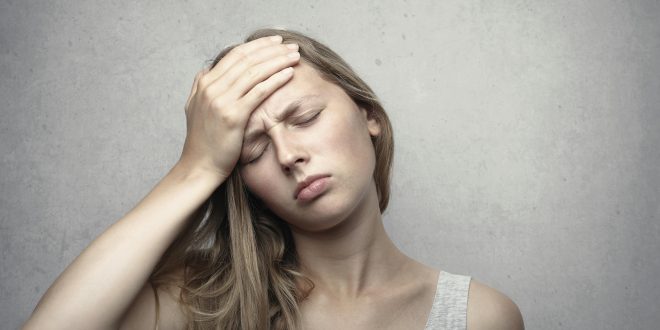
As a Migraine sufferer, I’ve been asking this question for years. After experiencing countless medications, therapies, tests, hospitalizations, and supplements, I still don’t claim to have the complete answer. Considering the next pain clinic and others like it has been another prominent practice as a migraineur. I have some interesting ideas to share that might give you a place to start your quest for answers to the question, “Why Are So Many Women Getting Migraines?”. Anything I say here is strictly suggestive information and is not to replace the professional advice of your health care provider. Be responsible and do the research for yourself.
Migraine statistics: How many?
 According to the WebMD site, “Over a lifetime, only 1% of us escape headaches altogether. Over a year, it is estimated that 90% of the population get at least one headache. About 16-17% of the population get a migraine headache sometime in their life – that means over a billion people worldwide at some point get migraine. The World Health Organization estimated in 2003 that 303 million people worldwide were migraine sufferers. A 2004 article suggested that there are almost 20 million migraine attacks happening every day.”
Another recent study showed that migraine attacks have increased by 60% since the 80’s. This is an astounding number that definitely suggests that it might be something that we are doing or are exposed to that we weren’t in the past. This statistic is most likely inaccurate because migraine diagnoses is much lower than the number of people who suffer. Many women getting migraines never seek medical help or simply write off the attacks as sinus headaches.
Migraine statistics: Who?
Factually, 25% of women suffer from migraine, a large difference from the 8% of men who get migraine headaches sometime in their lifetime. Though most suffer migraine between the ages of 25 and 50, some get their first headache before the age of 15. Interestingly, my entire family experienced some form of migraine before the age of 10. This isn’t a surprise; according to KidsHealth.org, “up to 10% of children between 5 and 15 may experience migraine, especially if one or both parents have a migraine history. Before puberty, girls and boys are almost equal in the migraines they suffer, possibly due to the estrogen changes that women go through at various stages in life. About 70% have some other close (first degree) relative with migraine.” So the question of why are women getting migraines may start with your children.
Women and Stress
 Obviously, we are made differently than our testosterone-filled counterparts. Naturally more sensitive, we feel everything. We have a tendency to internalize problems and conflicts, forgetting to nurture ourselves as we do our families. In addition, many women deal with far more stress than men do. With children, careers, elderly parents, and households to run, life has filled our days with mind-blowing responsibility. Even young girls can carry more concern for their grades, popularity, and appearance than boys of the same age. Stress has the power to increase the frequency of any symptom, but is a cruel enemy of women getting migraines.
Women and Societal Changes
I have also often wondered if our sensitivities and hormonal differences are causing us to respond to societal changes, technology, and food additives differently than men do. Think about all the new things that have bombarded our air, food, and water. Take cellular phones for instance, how many people do you know that don’t own one? I know, when I am on the phone for an extended period, I get a headache. There are products out there that are supposed to combat the EMF (Electro-magnetic Fields) that these devices omit. Are we hurting ourselves when we gab? Are women simply talking on the phone more than men? Likely.
Women and Weight
Another culprit could possibly be our obsession with weight. Inappropriate diets, pills, energy drinks, caffeine, skipping meals, and overzealous workouts are becoming the norm for millions of women worldwide. Instead of learning how to eat naturally healthy foods in the right portions, we are seeking out these damaging alternatives. Any one of those things could cause ongoing migraine problems. We must find a way to balance this important area of our lives in order to obtain true health and lessen the likelihood of getting migraine.
Migraine and Hormones
About 50% of women report that their periods trigger migraine episodes. If hormonal changes during our monthly cycles truly cause headaches, then that alone could be the main reason that more women get migraine. However, I don’t believe that we have to have such drastic fluctuations. Products like progesterone creams, wild yam supplements, and estrogen-balancing formulas are all-natural remedies that can help you stay hormonally healthy. If you have been diagnosed with PMDD, you may also have more severe symptoms during your menses. Additionally, women going through perimenopause and menopause can also experience frequent migraine attacks. In some cases, menopause medication or herbal supplements help to ease some of these symptoms. Talk to your doctor about treatment options.
Migraine and Personal Products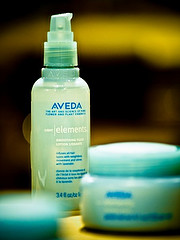
Think about all the products that women use on a daily basis. You’ve got face creams, deodorant, hair spray, make-up, shampoo, conditioner, nail polish, etc., most of which are toxic to us on a biological level. We use these “necessary” items without thought to the possible threat they pose to our health. We can be proactive in changing this problem for good.
Seek out organic cosmetics and hair products as alternatives to your current lines. Try more natural options like Aveda, Origins, Burt’s Bees, Grass Roots, Pureology, and Jason; all of these are affordable and available at either salons, health food stores, or your local department store. Next time you visit your hair salon, ask your stylist to recommend organic hair-care products. It may not solve the migraine problem completely, but it can’t hurt.
Migraine Dos and Don’ts
- Don’t wait too long to treat a headache. Migraine can actually cause an increase in neurological pain pathways when left untreated.
- Don’t start or stop any migraine treatment protocols without discussing them with your doctor first.
- Do learn about alternatives to mainstream medications; such as Biofeedback, Magnetic Therapy, Chiropractic, Cranial Sacral work, Massage Therapy, Colon Hydrotherapy, organ detoxifying, EFT (Emotional Freedom Technique), and Brain Entrainment.
- Don’t be afraid to try new medications. Even if you have had no success with past meds, keep an open mind about new treatments.
- Do stick with what works for you. It takes some years to figure out what meds, a combination of meds, natural therapies, and other remedies nix their pain and migraine symptoms.
- Don’t assume that those around you understand what you are going through. Take the time to educate them about migraine.
- Don’t give up on finding a cure for your migraine. It could be as simple as an allergy.
- Do seek out others who suffer from migraine. The support and understanding are invaluable.
- Do keep a diary to learn which foods and activities cause your headaches.
**** This post is strictly informational and is not meant to replace the advice of your healthcare provider. Women’s lifelink, its owners, administrators, contributors, affiliates, vendors, authors, and editors do not claim that this information will diagnose, treat, or improve any condition or disease.






i have had migraines for years, but only 2 or 3 of them were so bad that they were to the point if i moved even an inch, i would throw up from being so naeuuoss. What usually trigger them for me is not eating/drinking enough, hot weather, or i just get them every 4 months about. No medications work for me, but there is one cure. If you can fall asleep, you will wake up and it will be gone.Another way to get rid of it, (as weird as this will sound) is the smell of a skunk. Once time i was driving home with one, smelt a very strong skunk smell, and it was gone. I know how weird that sounds.
Tanya,
I appreciate your comment! Thanks for the share about the “skunk” episode. Definitely interesting! Everyone responds differently to various stimuli, so I suppose it’s up to each of us to research and do our own trials to see what helps. Though, I would hate to have to keep a skunk as a pet… Sleep is SOOO important to health in general that it’s no surprise that a good night’s rest helps headaches.
Great post! Definitely an interesting question with a variety of possible explanations.
I did a detox that required you to eliminate many foods like dairy and wheat. It was a long time ago, though. I seem to remember feeling more energy after the clease but not any headache relief. It’s a mystery. I want to do another cleanse soon. Also, I have considered the factor of yeast in my diagnosis.
We have treated 15 20 yrs cases.There is no medciine for H/A OR MIGRAINE. Not only these but for almost all painful diseases. Hence they become chronic.Acidity, excessive wind, cold , heat, sour food and sinusitis, constipation, intestinal inflammation;Blockage in the flow of Vital Energy are their causes. None of them can be treated with medciine. Our 100% success in treating migraine H/A confirms it.Acupuncture is the best treatment. I can treat it with naturopathy and YOG, but how can you manage pl see.Avoid late sleeping if possible;spicy, sour, stale bakery foods and alcohole.Sweet foods, sweet fruits, milk, rice and good sleep will help you.But you try one herbal remedy- two drops of drumstick leaves’ juice in opposite nostril if one side pains and both nostrils if full H/A will give you rescue. Betel leaf helps but it isvery strong. Source(s):SHREE SWASTHYAYOG TREATMENT, TRAINING RESEARCH INSTITUTER.H. – 19, Jhulelal Society, Sector – 2/E, Airoli, Navi Mumbai, INDIA.
Inda,
Thank you for your informative comment. I have even recently been on a new quest to find answers to the ongoing pain. I agree that mainstream meds do just mask symptoms and are not a cure. That said, I have had no choice at times but to take some medication to get temporary relief. Chronic pain can be devastating to your entire system and should not be allowed to continue at unbearable levels. I will try some of your suggestions and let you know how I do. Again, thanks for your input on this wide spread condition.
I do believe I saw something on the news yesterday about the relationship between migraines and exercise. The more you exercise, the less likely you are to having a migraine.
It’s probably true, but when you have a headache it’s the last thing you want to do. I know I could use more exercise in my life.